Thursday, May 2, 2013

Prosecutors Need to be Held Accountable; that opportunity Coming for Michael Morton!


Michael Morton Prosecutor Will Face Criminal Charges for Withholding Evidence


Texas Judge Charges Former Williamson County Prosecutor Ken Anderson With Three Felonies for Concealing Evidence of Morton’s Innocence
 
Contact: Paul Cates, pcates@innocenceproject.org
Alana Massie, amassie@innocenceproject.org 
 
(Austin, TX; April 19, 2013) – Today a Texas court has ruled that former Williamson County District Attorney Ken Anderson will face criminal contempt and tampering charges for failing to turn over evidence pointing to the innocence of Michael Morton, who was later exonerated by DNA evidence after serving 25 years for his wife’s murder, despite a court order and legal obligation to do so. The Judge ruled there was probable cause to believe Anderson violated three criminal laws by concealing evidence in the case and issued a warrant for his arrest. The decision to bring criminal charges against Anderson comes at the conclusion of a Court of Inquiry that was convened at the request of the Innocence Project, which uncovered evidence that Anderson failed to turn over that could have prevented Morton’s wrongful conviction during its decade long legal battle to prove Morton’s innocence. The court found that Anderson should face criminal charges for failing turn over favorable evidence pointing to Morton’s innocence despite specific requests from the defense and an order by the trial judge to do so. The court made specific findings that Anderson knew of evidence supporting Morton’s innocence but intentionally failed to disclose it to the defense.

Following today’s hearing, Anderson was taken to Williamson County jail for processing. He is expected to be released on bond which was set at $2,500 for each felony count.

“We believe this is a landmark case. I know that good prosecutors, and that’s most of them, agree that it’s important Judge Anderson be held accountable for the willful misconduct that caused Michael Morton to lose 25 years of his life,” said Barry Scheck, Co-Director of the Innocence Project, which is affiliated with Cardozo School of Law. “It’s extremely rare for prosecutors to be punished for deliberately hiding exculpatory evidence, much less face criminal charges. But this outcome will hopefully usher in a new era of oversight to ensure that prosecutors live up to their ethical obligations.” 

Read the rest of the article at this link:

http://www.innocenceproject.org/Content/Michael_Morton_Prosecutor_Will_Face_Criminal_Charges_for_Withholding_Evidence.php?utm_source=AdaptiveMailer&utm_medium=email&utm_campaign=April%20Newsletter&org=460&lvl=100&ite=820&lea=1775734&ctr=0&par=1



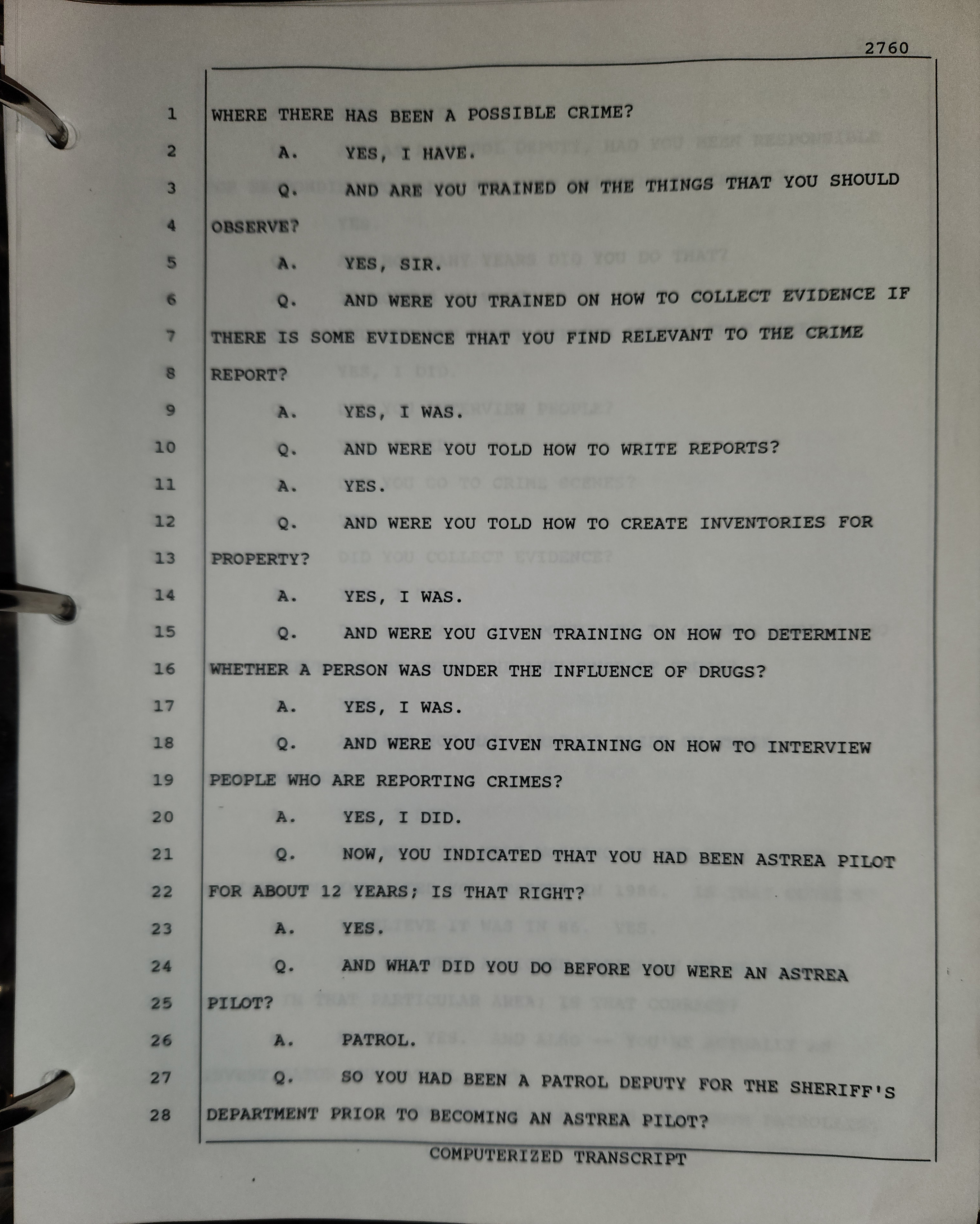
Former Prosecutor Jeff Dusek and retired investigator Richard Cooksey need to be held accountable for their part in the wrongful conviction of Kerry Dalton.
We also have Brady violations that Judge Thomas Whelan was not only aware of, but has his signature authorizing the actions taken; then that info was withheld from Kerry's original defense attorneys.
"Injustice anywhere is a threat to justice everywhere" (MLK Jr.) - take a stand for all of us, and for Kerry!


Tuesday, April 9, 2013

Kerry Dalton continues to live on death Row with no proof of any crime!

http://www.law.umich.edu/special/exoneration/Documents/NRE2012UPDATE4_1_13_FINAL.pdf


UPDATE: 2012
The National Registry of Exonerations
April 3, 2013
p. 3 of 39


**** "The number of known exonerations 
in cases where 
no crime occurred 
also increased, from 15% (129/873) to 19% (195/1050)."


Purchase CAGES at this link, and read the truth about the capital conviction of 
Kerry Lyn Dalton: 

https://victoriaannthorpe.com/Page_2.html

March 2012 Bill Moyers show reviewing the current Death Penalty system inthe U.S.

http://www.youtube.com/watch?v=YvpuN5X_dxg

Thursday, March 28, 2013

CAGES book review on Amazon


5.0 out of 5 stars Cages~ A Review March 26, 2013
Format:Paperback
One listens and watches the media largely unaffected. The stories of the day, while entertaining or informative, remain impersonal. This story is different. It is about real people, good people, people who could be your neighbors. It is about a family who has unfairly suffered at the feet of the United States Criminal Justice System, that very institution established for the purpose of preserving justice for all.

Kerry Lyn Dalton was erroneously and dishonestly sentenced to death. Her story, Cages, is a memorial compassionately penned by her sister, Victoria Thorpe. This true account paints the stains of painful childhood memories, blending them into the larger canvas of the courtroom trial. The recalled events of the family's early years intimately provide insight and stir empathy for the young troubled defendant, whose string of agreeably bad choices place her in a horrific situation.

One might ask, `How do I know for certain that Kerry didn't commit this unthinkable murder?' Yes, the story is shocking by any standard. The witnesses? Three drug addicts who testified against her in return for lighter sentences in other offences. Kerry maintains her innocence. Regardless of opinion or suppositions about guilt, the question to be examined is, `Do the facts substantiate the death penalty?' They do not.

No body (to this day). No weapon. No DNA evidence. No crime scene. And therefore, no remotely justifiable reason to inflict the death penalty.

Read this book, even if only to become educated about the naive assumption that our judicial system reliably delivers equity. Read this book and be humanely moved to action. Kerry Lyn Dalton's grossly wrongful sentencing was not the first in this nation. Let's work to make it one of the very last.

Wednesday, March 27, 2013

Tuesday, March 26, 2013

“I am a Human Being, Y’all !” A Cry from Death Row


Walla Walla Death Penalty article by Victoria  Thorpe


The pumping sounds repeated over and over through a reggae tune on my car stereo, “I’m a Human being y’al!” hit me hard since I had just left the visitors’ room for the Death Row residents in the Washington State Penitentiary. Michael Franti’s song, A Little Bit of Riddim, was washing over my ears as I drove out of Walla Walla. It was my initial visit to the small city of Walla Walla, Washington State Penitentiary, and my first time to meet the man on the other side of the glass partition.
One of the unexpected reactions I processed after leaving WSP was catching myself singing with Mr. Franti in full voice, bouncing along uninhibited to his inciting lyrics “Rock with me!” I even caught myself hitting the air with my fist and fervently cheering “I’m a human being y’all!” as I couldn’t shake the image of the soul I’d just walked away from. The person behind the glass remained behind until two corrections officers came to chain him up and escort him back to his solitary cell…Meanwhile, I drove away, to any place I wanted. I decided if I’d pick up something to eat and what. I chose which route to drive home to Spokane. I looked forward to being greeted by my family at the end of that day…It all was so much sweeter and real, measured against the lack of freedom my new friend lived with. My own liberties flitted around my mind like Tinkerbell wanting to grant me the ability to fly! I realized I felt so alive - after visiting Death Row in the Walla Walla prison.
The Washington State Penitentiary is an attractive prison, as prison’s go. Built in 1887 it carries some old world charm as you drive under the arching white sign announcing you’ve entered the facility  grounds, where 1,967 beds house men from minimum to max security (8 men are currently living on Death Row). About 1,000 staff work the facility. Though the prison generates approximately $55 million into the local economy (employment, services, medical, etc) Walla Walla residents admit few visit there. Even with the nearly finished expansion, their Prison Research Group didn’t think the populace would be affected by the increased 512 beds at medium security level.
I traveled to Walla Walla the week of January 14th on an invitation to speak with several groups about my own sister’s case and the current campaign in Washington State to end the death penalty. My schedule began with a lovely casual mingle time for Walla Walla folks at my hosts’ home, where I met a former chaplain to the prison, a former mayor of the fair city, and much respected past Superintendant (warden) Dick Morgan. Our conversation circled the subject academically for a while, until I began asking the ex-warden personal questions about his previous work.
What would we lose if we no longer had the Death Penalty?
In reply to my queries, the former Superintendant described the process we use here in our state. Those of us present for his candid explanation were surprised when he said he would create the execution team from among the people who actually knew the condemned man, furthermore; people who liked him, staff who likely were on a first name basis. Such answers sparked the desire in our small crowd to know intimate details. He went on to say that he wanted the last thing that man saw to be the faces of those who cared about him. My God! That took my imagination directly into that room with the team tying down a man, calming him, helping him through his own orchestrated and timed death, telling themselves they were doing their job and the right thing. I can’t imagine how they all carry that burden now. Isn’t that too much to ask of our public servants?
After all, we have the ability to securely contain a person whom we deem a threat to society, as Morgan stressed to me, “There’s absolutely no reason from a public safety standpoint these people can’t be managed as a Life Without [Parole] sentence. If people don’t have faith their prison system can manage these people, the problem is much larger than the death penalty. We’ve got a serious problem with the prison system, because there’s no excuse for the inability to safely manage dangerous inmates, including those that have been previously sentenced to death. And I really want to underscore there really are—there’s lots of murderers in general prison populations that committed crimes as bad or worse than those who are sentenced to death .”
 A prime example is Gary Ridgeway, convicted of 48 murders and incarcerated in the Walla Walla prison, unable to harm any more. According to Dick Morgan, and many other out-spoken retired wardens (such as Dr. Allen Ault of Georgia, and Jeanne Woodford, San Quentin) there is no valid excuse for executions when we have the ability to house convicted persons securely, “Washington State prisons manage over two thousand murderers today based on behavior and not sentence.”
Though I was thoroughly impressed with the many Walla Walla residents I’d met, my favorite was the man I visited in the IMU (Intensive Management Unit, or maximum security) section of the prison. I enjoyed a wonderful exchange about life, spirituality, family, mistakes (mine), and our common desire for growth. Our hope-filled conversation had a great deal to do with my elevated appreciation for life driving away from the picturesque city.  I was amazed yet again at the heights some humans can attain, even in extreme circumstances.
It was not the first Row I’d visited, but everyone is a unique human being, as I was reminded by the earnest eye contact across from me. I’ve come to recognize a disoriented expression common to residents of the Rows, invariably the effect of a constant need to fight to hold onto hope and their own sense of humanity. There is a quiet yet very profound pain to bear when you become transparent; no longer addressed, no longer heard, more of a ghost than a person. By the time the guard announced it was time I follow his escort out of the visitors’ room, my impulse was to hug—or  at least shake the hand of this person I’d just shared such powerful, heartfelt conversation with.  All I could do was touch the glass between us, and thank him for talking with me.
I cannot address the death penalty without at least touching on a few extremely important truths:
We risk killing innocents through an imperfect system run by imperfect humans. Vincent Motto, an exonerated man wrote these lyrics in the years following his release, “You don’t gotta be guilty to do time in the state pen.”  The song After Innocence was featured in the critically acclaimed 2005 film of the same title, documenting seven stories of innocents losing years of their lives before being exonerated, a police officer among them. People make mistakes, people have flaws. No system is perfect; ours has many flaws.  How can we trust a death sentence when we cannot be 100% sure? (142 have been exonerated from Death Rows since 1972)
It is unevenly pronounced: the underprivileged, deprived, poor, minorities, mental needs, abused, and addicted are the people you will find populating U.S. death rows. (3,167 last count)
Most everyone agrees it is not a deterrent. Our killing people—to   illustrate killing is wrong, has never proven to have a positive effect by anyone’s reports.
The financial cost is many times more than a life sentence. (These stats can be found at www.deathpenaltyinfo.org)
But most of all, the cost to our humanity is ultimately priceless. These are human beings, y’all!
One article cannot do justice to all the issues involved in the failure of the death penalty. It is not something a society based on democracy likes to look at; we’ve built specialized death chambers with our tax dollars, ones now looking much like a surgical room. But instead of preserving life, the table, similar to a medical table, is fitted with cross-like extensions to strap down a person’s arms, because this table was built to end a human being’s life against their will.  A few have gone willingly, giving up after years of existence cast outside of humanity. To them death is a relief from the pain of existing as the walking dead. We have heard  many arguments about the cruelty of the execution—but what about the years that lead up to it?
The basic question is this: Do we have the right to take the life of a defenseless person? I ask you, what is our moral obligation to intervene on behalf of those who cannot defend themselves? Under what circumstances do any of us have the right to take another person’s life?  It is my understanding we the people of these United States only have the right to take another’s life in self defense, when we are in eminent danger to the point of death and we cannot escape. All other conditions are not valid.
How then can we convey a power we ourselves do not possess to our government?
“Every day tens of thousands of murderers are managed very safely in prison systems across the country. Washington State prisons manage over two thousand murderers today based on behavior, not sentence,” former warden Morgan told me.
How are we any different than the actions we are outraged by when we ourselves participate in unnecessary killings?  The majority of the industrialized world has banned the practice of killing its own citizens, the European countries have abolished capital punishment, including Russia’s moratorium since 1996 (with the exception of Belarus).  A civilized society strives for peace, and that does not come by way of violence. Our country prides itself on being a free nation of modern thinkers, highly developed, and embracing a diversity of great faiths. Yet we are currently unashamed to be counted among those who participate in the ancient practice of the death penalty: Afghanistan, China, Saudi Arabia, North Korea, Iran, and Iraq. 
Peace and safety develop out of a place of compassion and forgiveness, not vengeance. I have heard it called Justice – but you cannot mask the reality, revenge is a base instinct that is common to us all. However, just as greed and lust are also natural instincts, we are called to restrain those urges to the benefit of us all, not fan them into out of control fires. We need to look deeper into the culture and take individual responsibility for the prevalence of violence throughout our beloved country.
There is no justification for the death penalty in a day and age when we can keep society safe with modern facilities. It is a barbaric choice we make consciously.


This article was published at:

http://spokanefavs.com/politics/legislation/i-am-a-human-being-yall-a-cry-from-death-row


Tuesday, March 12, 2013

Free Kerry Lyn Dalton

Click here to see Youtube video:
http://www.youtube.com/watch?v=Ge2SFA_yYJk

Safe and Just Alternatives


Hearing testimony for  HB1504  March 6th, 2013,                                                 ending the Death Penalty in WA state


Testimony was given by (left to right) former CA prosecutor Darryl Stallworth, former Seattle police Chief Norm Stamper, head of Safe and Just Alternatives campaign Mishi Faruqee, Victims' family member Judy Karr, former WSP Superintendent Dick Morgan, Representative Reuven Carlyle.

Watch the hearing at this link:
http://blogs.seattletimes.com/opinionnw/2013/03/07/poll-should-washington-state-repeal-the-death-penalty/

Testimony submitted from Victoria Thorpe (about 87 min into the hearing)

"I am compelled to come before your audience today because of the experiences that have become an integral part of my personal history and have determined who I am.  I have a sister living on death row in California, (she has struggled to survive for nearly 18 years).
The nightmare that changed both our lives forever has evolved into many privileged experiences that beg to be shared.
It does not flow easily, this attempt to share horror side-by-side with the deepest love and hopefulness; it has painfully evolved over two decades to this present point, where I dare take off my mask and expose my heart and soul to strangers. I come to beg for compassion. I represent the silent victims of the Death Penalty—families and loved ones of human beings sentenced to be executed.
I love my sister dearly, she adds a great deal to my life.
I drive the 1,069 mile trip to Central California about four times each year, I’d go farther if I had to, I’d go more often if it were possible. In a prison I enjoy her company while locked in a tiny room for a few hours. We have both learned to savor life more; I love to watch her describe the new tiny wild flowers that sometimes creep into the Death Row yard, or even better, hear her re-tell her favorite stories of her children, or our childhood, in her animated ways. She misses the wind through her hair on a motorcycle ride. And she is constantly at work on her inner growth. My sister is one of the most honest and loyal persons I know.
I have been forced to imagine what it would be like to witness her execution—we have had to have that conversation—her deep concern is that I not be subjected to watch such an act of brutality carried out. Mine is that I will not be allowed to hold her hand as she has the life extinguished from her, as I would, or any of you would, wish to do for your loved one dying of cancer or such.
Even with the severely limited access to each other, our relationship is always growing, she is my best friend. Among the layers of unimaginable scars this sentence has built upon each of us, the cruelty of seeing her strapped down, rendering her completely helpless, while an audience, much like you all assembled here, watch her being murdered, would just about steal all my hope for human kind.
The system labels someone as a monster or evil in order to ease the guilt of killing a helpless person. But even if I were to concede to this label over any human—how would it be logical? When you attempt to overcome evil (a bad deed) with evil you simply multiply the evil.
In my opinion, in order to really change our current culture of violence, there must be work done to bring our country into a place of balance between protecting the collective and protecting individuals’ well-being. The Death Penalty serves neither the collective, nor the individual’s right to life. It violates them both.
You must stop the killing. You are good people who love their families—please imagine one of them in place of the eight men we house on Washington’s Death Row. Please see their loved ones’ broken hearts. Please allow your compassion to rule alongside your wisdom."